Semaglutide Protein Intake: How to Support Muscle While Losing Weight
If you take semaglutide, you may find that eating enough protein takes more planning than it used to. A smaller appetite can make even ordinary meals feel like a lot. And when portions shrink, it can be harder to get enough of the foods that provide protein and other nutrients.
Protein is one part of supporting muscle while losing weight. Resistance exercise, overall food intake, health conditions, and your individual needs matter too. There is no single protein target that is right for everyone taking a GLP-1 medication.
Why protein can be harder to get on semaglutide
Semaglutide can reduce hunger and food intake. In a small, 12-week controlled study, participants taking semaglutide ate less during test meals than those taking placebo. That helps explain why keeping up with your usual eating routine, or with protein in particular, may become difficult.
Weight loss can include both fat and lean tissue. In an exploratory body-composition analysis from the STEP 1 trial, participants taking semaglutide lost lean mass as well as body fat. “Lean mass” is not the same as skeletal muscle: it includes other non-fat tissues, too. The findings don’t tell us exactly how much muscle each person may lose, or what will happen to you.
Adequate nutrition and strength-building activity are practical parts of a weight-management plan. But neither protein nor a supplement can guarantee that you will avoid muscle loss. The aim is to support your health and function while your weight changes.

Start with protein-containing foods you can manage
If a large meal feels uncomfortable or unappealing, try thinking in terms of smaller eating occasions. Include a protein source when you eat, rather than relying on one large serving at the end of the day. Spreading protein across meals and snacks can make it easier to work into a low-appetite day.
Protein-containing options include:
- Greek yogurt, cottage cheese, or milk
- Eggs
- Fish, poultry, or lean meat
- Tofu, tempeh, or beans
- A protein drink or powder, if it suits your needs and is well tolerated
Choose foods that work with your preferences, budget, and any symptoms you’re experiencing. A few bites of a familiar, easy-to-eat option may be more realistic than planning a meal you can’t finish.
A simple way to plan a day
Use this as a flexible structure, not a prescription:
- First meal: Add eggs, yogurt, cottage cheese, or tofu to a small breakfast.
- Midday: Include fish, chicken, beans, or another protein source in a lunch you can finish comfortably.
- Snack, if useful: Try yogurt, a glass of milk, or a protein drink.
- Evening meal: Include a protein food alongside other foods you enjoy and tolerate.
You don’t need to copy this menu. The useful habit is to check whether your meals and snacks include protein, then discuss any shortfall with your care team.
Ask before setting a gram target
The amount of protein you need depends on more than your medication. Age, body size, activity, overall diet, and health conditions can all affect what is appropriate. Kidney disease and other medical concerns can change the advice, so avoid adopting a high-protein target based on a general online rule.
The adult Recommended Dietary Allowance is commonly stated as 0.8 grams of protein per kilogram of body weight per day. That is a general reference point, not a personalized GLP-1 prescription. Some expert guidance discusses higher intakes during weight loss, but the best target and how to calculate it for a particular person are still questions for an individual assessment.
Ask your prescriber or a registered dietitian (RD) to help you set a goal that fits your circumstances. An RD can also help you plan around low appetite, food aversions, nausea, constipation, or other digestive symptoms. If you’re struggling to eat or drink enough, let your clinician know instead of trying to solve it by adding a supplement alone.
Pair nutrition with strength-building activity
Protein is not the whole plan. Resistance exercise (such as lifting weights, using resistance bands, or doing appropriate body-weight movements) is commonly included in strategies to support muscle during weight loss. The right starting point depends on your fitness, mobility, health, and experience.
If you’re new to strength training, ask your clinician whether it is appropriate and how to begin safely. A physical therapist or qualified exercise professional may help you adapt movements to your abilities. Start with a manageable plan and build gradually. Don’t push through pain or significant weakness.

Where a protein supplement may fit
A protein powder or drink can be one convenient option when food alone isn’t meeting your needs. It is not automatically necessary, and it does not replace a balanced diet or medical care. Check the ingredients, serving size, allergens, and protein amount, and ask your clinician or pharmacist if you’re unsure whether it suits you.
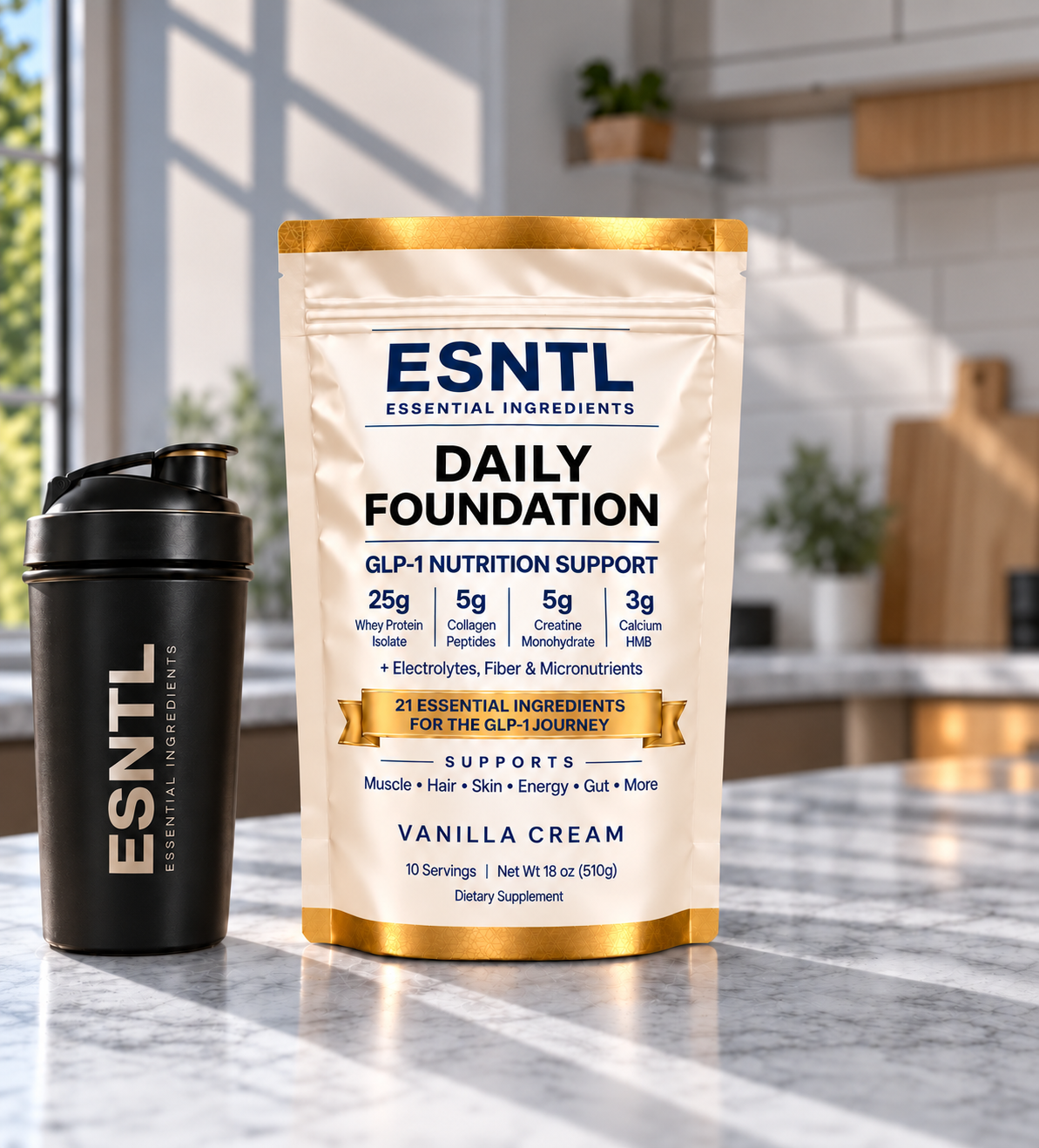
ESNTL Daily Foundation provides 25 g of whey protein isolate per serving, along with 5 g of creatine monohydrate and 3 g of calcium-HMB. It is a dietary supplement, not a complete diet or substitute for medical care. If you want to inspect the formula, the Daily Foundation label and product details list the ingredients and amounts. The product contains milk (whey); review the label for other ingredients and allergens.

A practical checklist for your next appointment
Bring specific questions, not just a general concern about protein. You might ask:
- What protein target makes sense for me, and how should it be calculated?
- Do any of my health conditions or medications change that target?
- What are some small meals or snacks that could work with my appetite?
- Would a protein supplement be appropriate for me?
- What kind of resistance exercise is safe to start with?
- Should we monitor my strength, function, or nutrition over time?
If eating has become persistently difficult, or you’re concerned about weakness or rapid changes in your ability to function, contact your care team. Those details can help them decide what support you need.
The takeaway
Semaglutide can reduce appetite, which may make it harder to eat enough protein. A practical first step is to include a protein-containing food at the meals or snacks you can manage. Your personal target should come from your clinician or registered dietitian, not a one-size-fits-all number.
Protein can support a broader nutrition plan, and resistance exercise may be another useful part of that plan. Neither guarantees that muscle loss will be prevented. The next best step is to talk with your care team about a routine you can maintain.